
I’m Caleb Whitaker, the shop foreman here at Ron's Repair Shop LLC, and if there’s one call we get more than any other when that first real cold snap hits Ozark, it’s the “no-heat” call. It usually comes early in the morning, just after a family wakes up to find their breath fogging in the hallway. That was exactly the situation when my phone rang a few weeks back. The homeowner was in a classic predicament: the thermostat was on, but the air coming from the vents was ice cold. With temperatures dropping, this wasn't just an inconvenience; it was an urgent problem that needed a fast solution.
This is a common scenario in our area. The neighborhoods in Ozark, with their well-built homes from the 1990s and 2000s, have reliable heating systems. But after a long, quiet summer, the first time that furnace is asked to work hard can reveal underlying issues. The homeowner had tried the usual steps - checking the thermostat batteries, flipping the breaker - but the furnace simply wouldn't kick on and stay on. They needed a professional no-heat furnace repair, and they needed it done quickly. They called us at Ron's Repair Shop LLC because they knew we specialize in straightforward diagnostics and honest repairs.
The Assessment
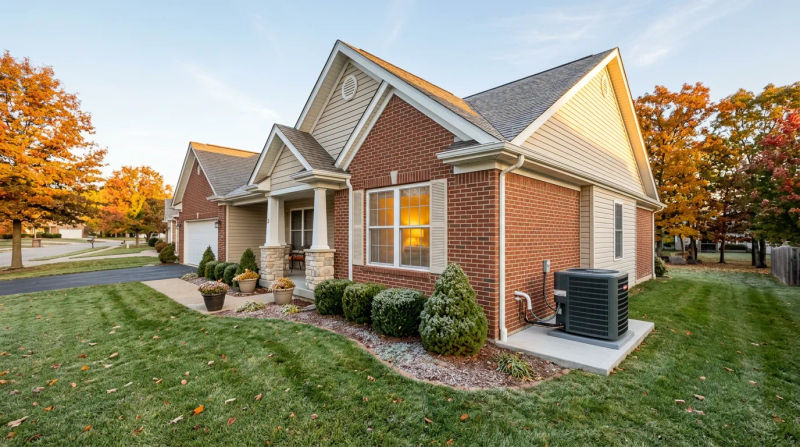
When I arrived at the home, a two-story house with vinyl and brick accents typical of its era, the first thing I did was listen. I had the homeowner turn the heat on at the thermostat, and we went down to the utility closet. I could hear the furnace begin its startup sequence: the inducer motor whirred to life, a click followed, and I could see the hot surface ignitor begin to glow a bright orange. A few seconds later, another click as the gas valve opened, and then a clean blue flame ignited in the burner assembly. But just as quickly as it started, the flame went out. The system tried this cycle two more times before locking itself out for safety.
This sequence of events is a classic symptom, and it immediately narrowed down the possibilities. For a homeowner facing an Ozark MO furnace won’t start repair situation, this can be baffling. The furnace is starting, but it won’t stay started. This tells a technician that the thermostat is working, the ignitor is good, and the gas is flowing. The problem isn’t ignition; it’s flame detection. The furnace’s main control board isn’t getting the signal that a flame is present, so it shuts off the gas supply as a safety precaution to prevent pumping unburned gas into the home. My prime suspect was a small, often-overlooked component: the flame sensor.
I also took a moment to inspect the surrounding system. The air filter was moderately dirty but not clogged enough to cause this specific issue. I went outside to check the intake and exhaust PVC pipes, making sure they weren't obstructed by the heavy leaf fall we’d had that autumn. Everything looked clear. All signs pointed back to that one simple, but critical, part.
Our Solution
This is the kind of dirty flame sensor heating repair case study we see all the time. Over a season of use, and especially after a summer of sitting idle, the flame sensor rod can develop a thin layer of carbon buildup or oxidation. This coating acts as an insulator, preventing the sensor from detecting the flame and sending the proper millivolt signal back to the control board. The solution is often not a replacement, but a simple, meticulous cleaning.
At Ron's Repair Shop LLC, we believe in repairing, not just replacing. It saves our customers money and gets them back up and running faster. I shut off the power to the furnace, closed the gas valve, and carefully removed the single screw holding the flame sensor in place. I slid the sensor out of its bracket - it’s a thin metal rod, and sure enough, it was covered in a dull, whitish-gray film.
Using a clean, fine-grit emery cloth, I gently polished the metal rod until it was shiny again. It’s crucial not to use coarse sandpaper, which can scratch the rod and cause carbon to build up even faster in the future. After wiping it clean with a dry cloth to remove any residue, I reinstalled it, secured the screw, and reconnected the wire. The entire hands-on process took less than ten minutes.
With the sensor back in place, I restored power and gas and initiated the startup sequence again. This time, the result was different. The inducer motor started, the ignitor glowed, the gas valve opened, and the burners ignited with a familiar whoosh. But this time, they stayed lit. The main blower fan kicked on a minute later, and warm air began circulating through the house. We had successfully completed a same-day heater repair Ozark Missouri call, turning a cold house back into a comfortable home.
The Results
Before I left, I cycled the furnace a few more times to ensure the fix was solid. The system responded perfectly every time. The homeowner was incredibly relieved. They had been bracing for a costly repair, expecting to hear they needed a new ignitor, gas valve, or even a control board. Instead, the solution was a quick service call focused on maintenance and cleaning.
Before: The homeowner had a non-functional furnace that would shut off seconds after igniting, leaving their family in a cold house on a freezing morning.
After: The furnace was running smoothly and reliably, providing consistent heat. The homeowner not only had their heat restored but also received peace of mind and a bit of education on how their system works.
I provided the homeowner with a short prevention checklist for the future:
- Check and change the air filter every 1-3 months.
- Keep the area around the furnace, including outdoor vents, clear of debris, leaves, and snow.
- Schedule an annual tune-up with Ron's Repair Shop LLC before the heating season begins to catch issues like this proactively.
The final result was a warm home, a happy customer, and another successful project for our team. This is what we pride ourselves on at Ron's Repair Shop LLC: providing honest, efficient, and effective solutions that prioritize our neighbors' comfort and budget.
Conclusion
That morning in Ozark started with a stressful no-heat emergency, but it ended with a simple, affordable repair and a warm home. This project is a perfect example of how a complex-seeming problem often has a straightforward solution when you have the right diagnostic experience. You don't always need expensive parts; sometimes, you just need an expert who knows where to look. We were proud to deliver that expertise and restore comfort to our customer's home on the very same day.
Ready for your own Ron's Repair Shop LLC experience? Contact us today for a free inspection.